
When to rekey or change the locks on your house
Two different jobs, two different prices, and most people ask for the wrong one. Here is how to tell which you need.
Updated November 2026
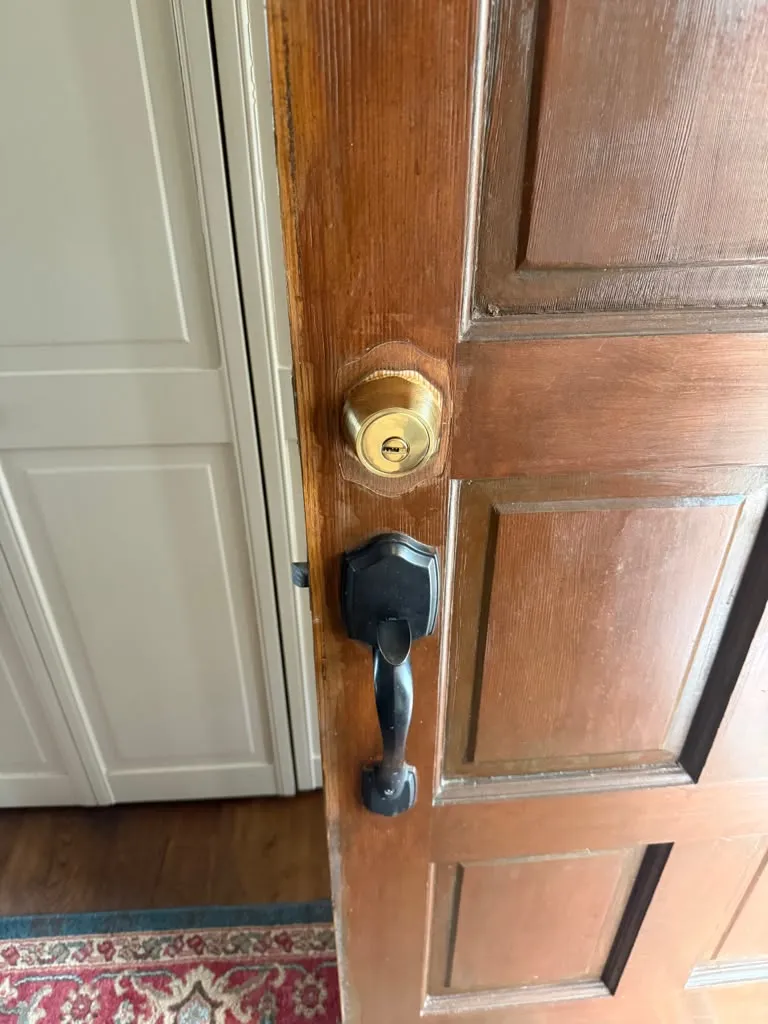
Rekeying and replacing are not the same thing
Rekeying keeps the hardware you already have. The technician takes the cylinder apart, changes the pins inside and cuts a new key to match. The lock on your door looks identical afterwards. Every old key stops working.
Replacing means new hardware on the door: new lock, new key, and whatever the new lock costs.
Rekeying is the cheaper of the two, and it is what most people actually need.
When rekeying is the answer
You just moved in. This is the big one. The builder had keys. So did the agent, the previous owner, the contractors who worked on the place, and whoever those people lent a key to. Nobody can tell you how many copies exist, because nobody was counting.
You lost your keys. Especially if they were on a ring with anything that points at your address — a gym tag, a work badge, a car key with a dealer sticker on it.
Someone left. A tenant moved out, a roommate moved on, a relationship ended. Rekeying settles the question without needing a conversation about it.
There are simply too many copies. Years of dog walkers, cleaners and neighbors watching the house add up, and you stop being able to name them all.
In all four cases the hardware is fine. The problem is not the lock, it is the list of people who can open it.
When replacing is the answer
The key needs jiggling. If you have to wiggle it, lift it or pull the door toward you to make it turn, that is the lock telling you the pins and the cylinder are worn. It is cheaper to handle on a Tuesday afternoon than on the night it finally refuses.
The hardware is visibly tired. Rust, a handle that moves when it should not, a deadbolt you have to shoulder the door to throw.
You want to stop carrying keys. A keypad deadbolt usually drops into the holes that are already there, with no new holes and no repainting.
It is builder hardware. New subdivisions get the cheapest lock that passes inspection. If the house is a few years old and nothing has been touched, that is what is on your door.
The part almost nobody thinks about
The lock is rarely the weak point. The door frame is.
The strike plate is the metal piece on the frame that the bolt goes into. On most houses it is held by two short screws that bite into soft trim and stop there, without reaching the framing behind it. A hard kick splits the trim, and the door opens with the deadbolt still locked, attached to a piece of wood on the floor.
Three-inch screws through the strike plate into the stud behind it cost a few dollars and take ten minutes. For a front door, that does more than upgrading the lock does.
We do not charge for it. If we are already at your door for something else, ask the technician and he will do it while he is there.
What about smart locks
They solve a convenience problem more than a security one, and that is a perfectly good reason to want one: codes you can give out and take back, no key under the mat, no copy at the neighbor’s.
Two things worth knowing. Most still have a mechanical override cylinder, and that cylinder is exactly as good or as bad as any other — so the strike plate above still matters. And the ones that run on batteries will eventually run out of batteries, usually at the worst possible moment.
What it costs
Rekeying is quoted in person, because it depends on how many doors you have and whether you want them all matched to one key. Replacement depends on the hardware you choose. The starting prices for everything else are published.
Either way the technician gives you the number before starting, and looking costs nothing.